How Many Teeth Can Dental Bridges Replace
 When a person is missing one or more teeth but does not need a full set of dentures, dental bridges may be recommended to take the place of the lost teeth. The number of teeth that a dental bridge replaces may depend on several factors.
How dental bridges function
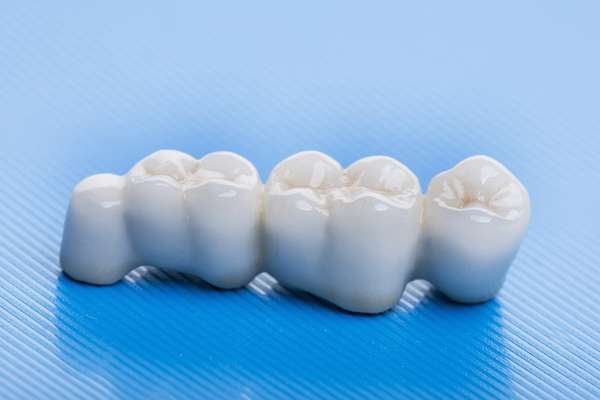
Dental bridges consist of two or more crowns that attach to the abutment teeth at each end of the vacant space and connect to one or more artificial teeth called pontics. Bridges are usually constructed from a metal base, covered by porcelain and shaded to match the natural teeth.
Number of teeth a dental bridge can replace
A dental bridge can take the place of a single tooth but is commonly used to restore two, three, four, or more teeth. The greater the number of missing teeth, the more crowns needed to support the bridge and the less stable the bridge tends to be. Dentists use implants to provide additional reinforcement for bridges that replace large numbers of teeth or for patients who do not have strong enough natural teeth to support the bridge. Dental implants may also be used as free-standing teeth to fill gaps that are not adjacent to the bridged area.
Benefits of bridges
People often elect to have missing front teeth restored for aesthetic reasons, but it can also be wise to replace back teeth. When spaces in the gums are left empty, the surrounding teeth can move in the patient's mouth, causing changes to the bite and sometimes resulting in problems such as temporomandibular joint disorders. Bridges also have other aesthetic and functional benefits:
- Restore the appearance of the smile
- Improve chewing and speaking ability
- Maintain the shape of the face
- Distribute bite forces properly
Check out what others are saying about our dental services on Yelp: Dental Bridges in San Francisco, CA.
Types of bridges
Bridges come in four main types.
- Traditional bridges use a construction method that melds porcelain with ceramic or metal. These bridges are created by placing a crown or implant on either side of the missing teeth with a pontic in between. This is the most common type of bridge.
- Cantilever bridges prove useful if there is only a tooth bordering on one side of the vacant space where the missing teeth resided. This type of bridge is used infrequently because of the potential for damage to the natural teeth.
- Maryland bridges consist of a pontic that is supported by a metal or porcelain framework bonded to the adjacent teeth, rather than supported by crowns. This bridge avoids the need for crowns but may not be as strong as a traditional bridge.
- Implant-supported bridges are often used when more than one or two missing teeth are being replaced. These bridges do not rely on natural teeth for support. Typically, an implant is placed for each missing tooth, but in cases where this is not possible, implant-supported crowns can be used in the same manner as the natural teeth in a traditional bridge.
Conclusion
Using dental bridges to replace missing teeth can improve the appearance of the smile and the functionality of the teeth. The number of teeth that can be replaced depends on the type of bridge and how many healthy natural teeth the patient has retained.
Request an appointment or call Serenity Dental Spa at 415-376-6196 for an appointment in our San Francisco office.
Related Posts
A dental crown offers a durable way to protect a damaged tooth while restoring a natural look and full function to a patient's smile. This long-term solution covers a vulnerable area to prevent further breakage or decay. While these restorations are incredibly strong, they require specific care to remain in top shape for a decade…
Dental crowns come in a range of material options, including zirconium and porcelain. These materials vastly increase the aesthetics and reliability of dental crowns as compared to past alternatives. Regardless of the material, most dental crowns look and work well. However, there are some significant variations between these options to be aware of. This article…
Dental crowns are incredibly useful for tooth restoration because they can fix various aesthetic defects and restore strength to teeth that have been weakened by decay or injuries. One of the most important advantages of crowns is their longevity; with good treatment, your new crowns will last a long time. Knowing what precautions to take…